
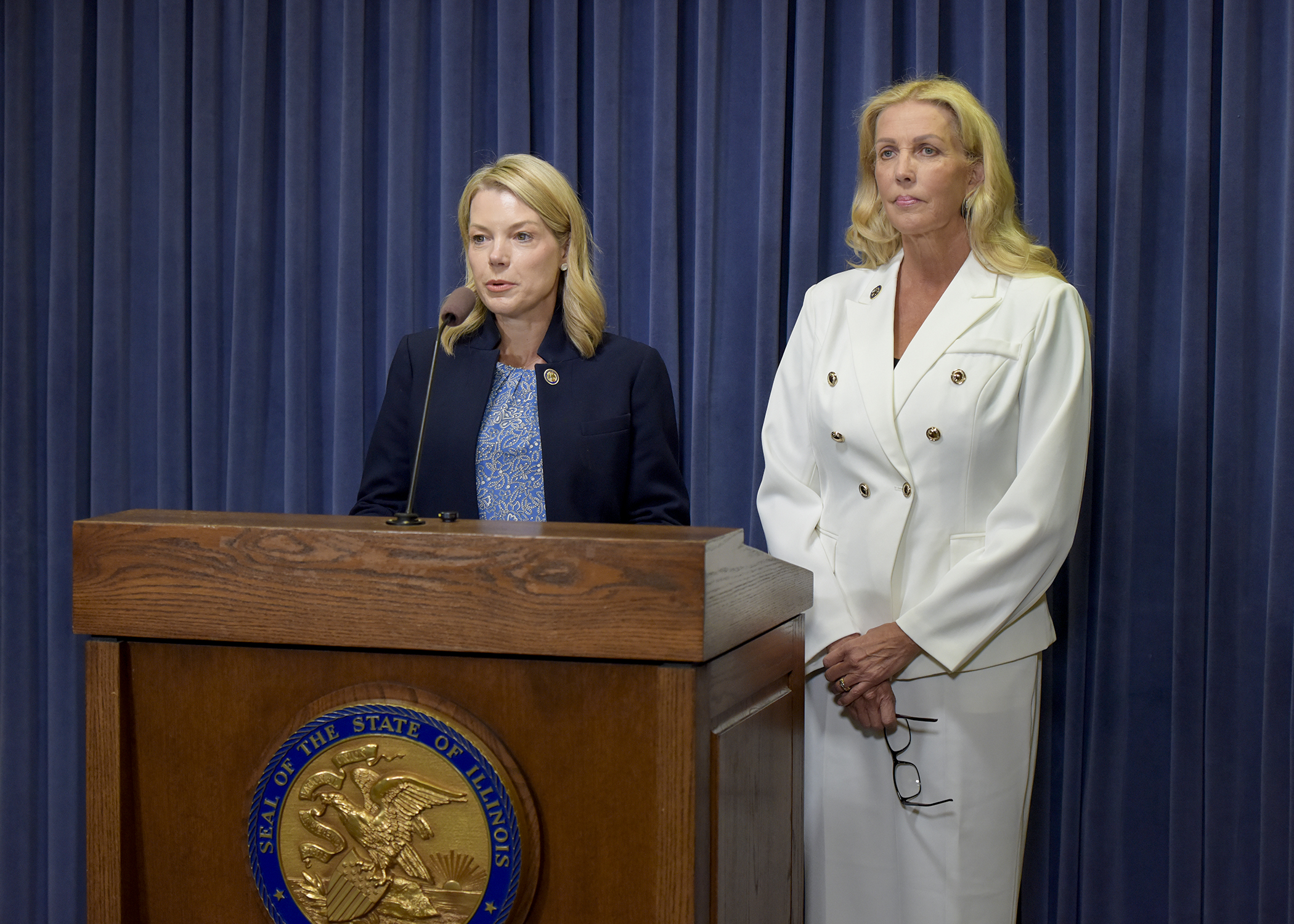
Senate Deputy Minority Leader Sue Rezin and State Senator Erica Harriss recently unveiled a legislative package aimed at strengthening protections for children online by addressing social media harms, sexual exploitation, and minors’ access to adult content.
The legislative package is designed to put stronger safeguards in place for children in the digital space by restricting harmful online access, increasing accountability for tech companies, and improving social media algorithms.
“Kids today are growing up in a digital world that is moving faster than our laws have kept up, and for too long, we have allowed that gap to exist,” said Sen. Rezin. “We have a responsibility to step in, set clear expectations, and make sure the online spaces our children are using every day are safe and built with their well-being in mind.”
Among the proposals included in the package is Senate Bill 4046, sponsored by Sen. Rezin, to restrict social media access for children under the age of 16 by requiring platforms to implement age assurance measures. The proposal is intended to address growing concerns about the harmful effects social media can have on children’s mental health, development, and overall well-being.
Sen. Rezin is also sponsoring legislation focused on improving how social media platforms operate. Senate Bill 3454, the Better Social Media Feeds Act, would require companies to disclose how their algorithms recommend content, including the data inputs used to shape what users see. The bill also directs platforms to prioritize long-term user well-being over engagement-driven design and gives users more control over their content preferences. The measure is intended to increase transparency and reduce exposure to harmful content.
The legislative package also includes the Age-Appropriate Design Code Act, Senate Bill 3241, which is sponsored by Sen. Rezin, requiring companies that collect children’s personal data in Illinois to prioritize the best interests of minors over commercial gain. The bill would establish stronger privacy protections by default, limit data collection, and restrict profiling and targeted advertising aimed at children. It would also require businesses to conduct data protection impact assessments and provide them to the Attorney General upon request. Violations could result in civil penalties of up to $7,500 per affected child.
“We know social media is having a real impact on our kids, from mental health challenges to exposure to harmful content,” Rezin said. “While many believe the answer is to fix these platforms, and I agree, we also have to be honest that if meaningful changes are not made, we cannot simply stand by and do nothing. Everything has to be on the table when it comes to protecting children.”
As part of the package, Harriss is sponsoring the Adult Content Age Verification Act, Senate Bill 3945, to require websites containing adult content to verify that users are at least 18 years old through government-issued identification or other approved methods. Companies that fail to comply could face fines of up to $5,000 per day, with penalties directed to support child cybercrime investigations.
“Parents are doing everything they can to protect their children, but too often they are up against an online environment with few real safeguards,” said Sen. Harriss. “If a business is profiting from explicit material, it should take reasonable steps to ensure that minors cannot access it. This is a commonsense step that puts children first and gives families more support in navigating today’s digital world.”
Sen. Harriss said the broader package represents an effort to give parents more support and ensure children are not left vulnerable online.
“The internet is more accessible, more pervasive, and in many ways more dangerous for young people than ever before,” Sen. Harriss said. “These proposals are about creating reasonable guardrails, protecting children from harmful and exploitative content, and making sure Illinois is taking meaningful action to keep kids safe online.”
The senators discussed the legislative package as part of their ongoing efforts to strengthen protections for children and families across Illinois.